


The Interactive Film Club
A methodology by Dr. Hanna Podosynnikova
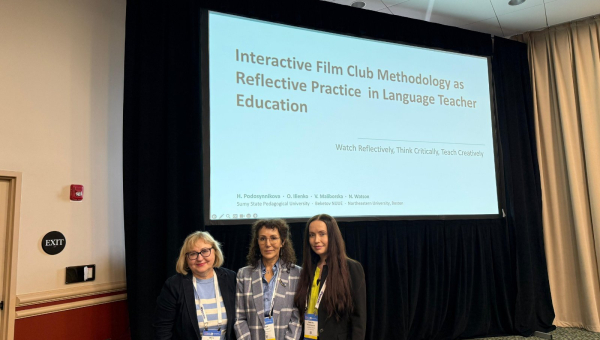
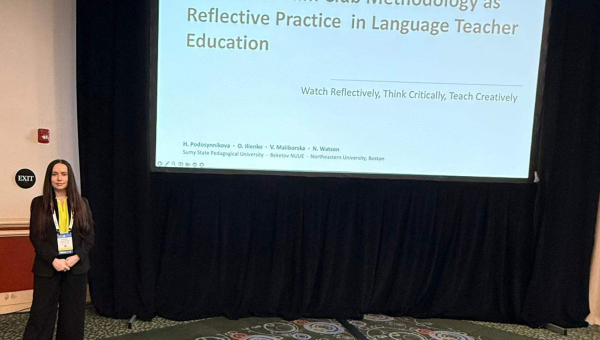
The Interactive Film Club is an original teaching methodology created by Dr. Hanna Podosynnikova, Associate Professor at the Department of Foreign and Slavic Philology, A. S. Makarenko Sumy State Pedagogical University. Developed and continuously refined since 2015, it has grown into a full-scale educational programme at the Interuniversity Research Laboratory of Modern Technologies for Teaching Foreign Languages and Cultures.
The idea is simple but powerful: watching and discussing authentic films is one of the most natural, engaging, and effective ways to learn a language and understand another culture. The Film Club turns that everyday experience into a structured, professionally meaningful learning journey – especially designed for future English teachers.
So, What Exactly Is the Film Club?
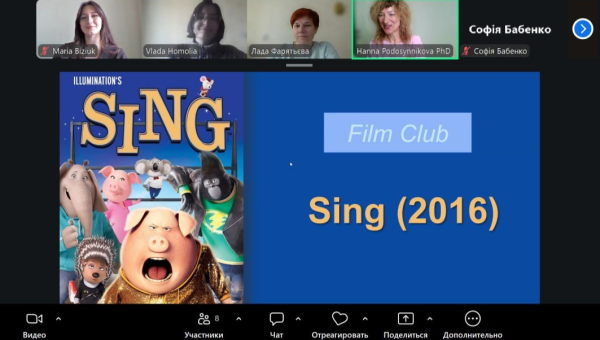
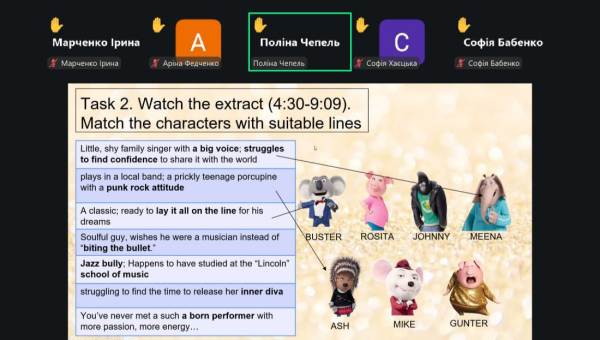
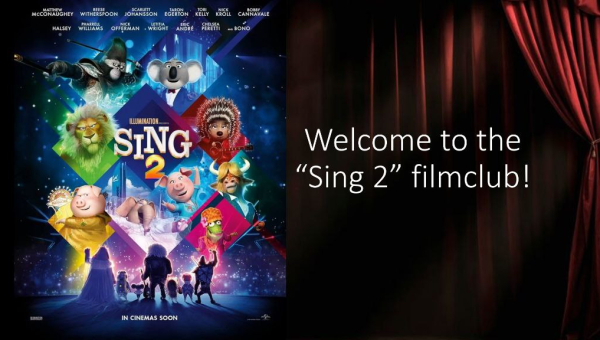
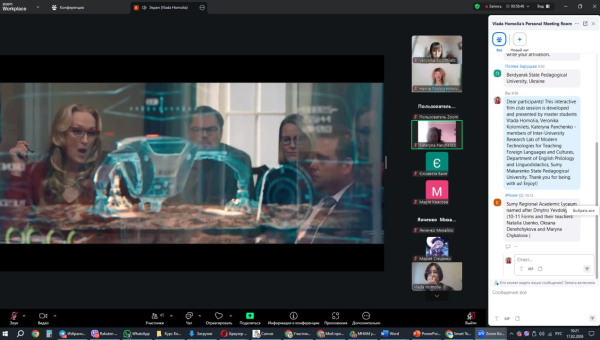
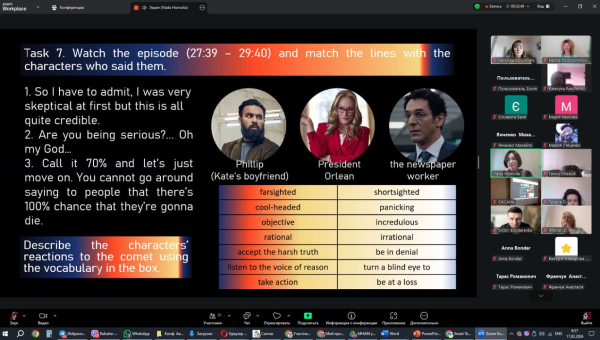
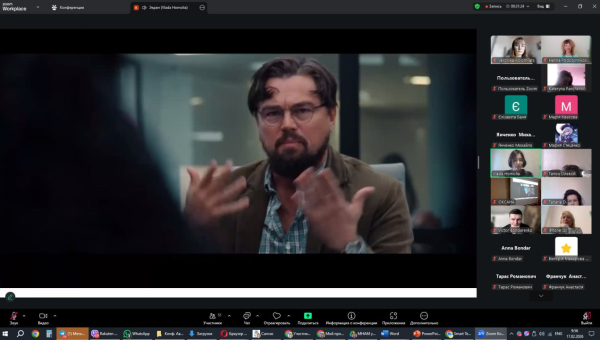
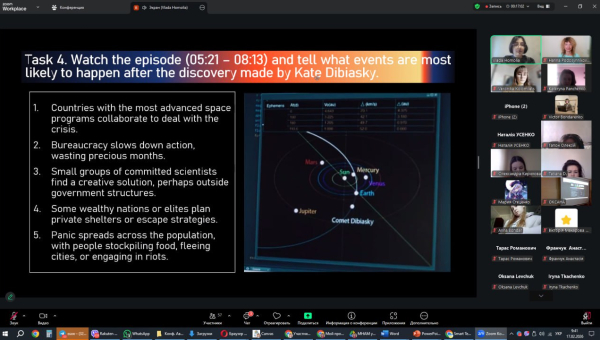
Think of it as a film club with a purpose. Participants watch carefully chosen fragments of a real, full-length film – not a simplified teaching video, but an actual feature film – and after each short episode (about 5 minutes), they respond through a variety of tasks: discussion questions, vocabulary work, creative writing, role-play, or professional reflection.
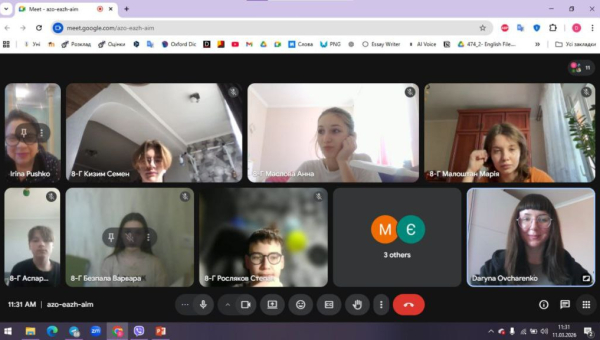
The Film Club goes by a few names – "English Teacher's Film Club" or simply "English Film Club" – but the heart of it stays the same: real films, real conversations, real learning. It can run as a face-to-face session, a blended course, or entirely online. It fits naturally into university curricula and equally well as an extracurricular activity.
Since 2015, this methodology has been developed and tested at A. S. Makarenko Sumy State Pedagogical University, with students and faculty from multiple universities taking part over the years.
Why Films?
Films are not just entertainment – they are windows into other lives, cultures, and ways of thinking. A good film puts you inside someone else's world: you hear how people really speak, you see how they solve problems, you feel what they value. That kind of immersive experience is hard to replicate in a traditional classroom.
For language learners, films offer something textbooks cannot: authentic speech, cultural context, emotional engagement, and a reason to care about what's being said. For future teachers, films also offer a professional mirror – a chance to observe human situations, discuss them critically, and think about how they would bring these themes into their own future classrooms.
Cinema, as scholars have noted, is one of the storytelling forms closest to real human conversation – combining image, sound, dialogue, and emotion into a single coherent experience. That is exactly what makes it such a rich starting point for learning.
How a Film Club Session Works
A Film Club session has three stages, which together create a complete learning arc:
Before the Film
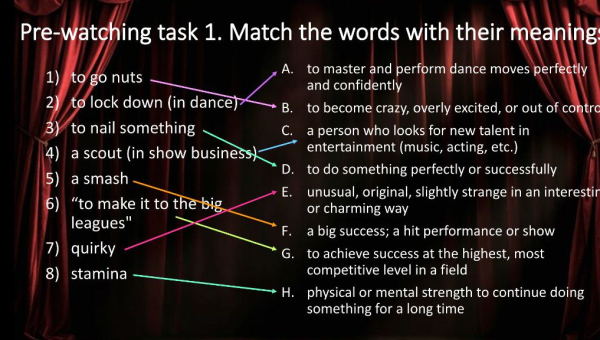
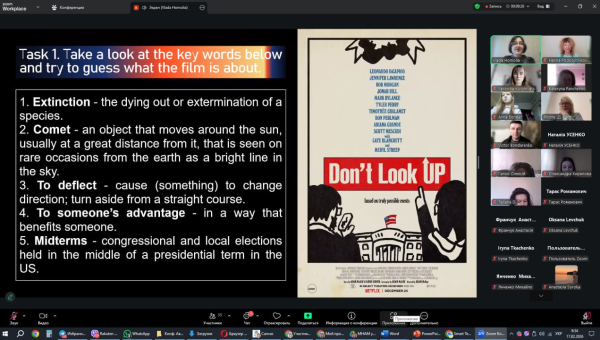
Participants are introduced to the topic, key vocabulary, and cultural context of the film. This stage gets everyone thinking and talking before a single frame is played – lowering anxiety and raising curiosity.
During the Film
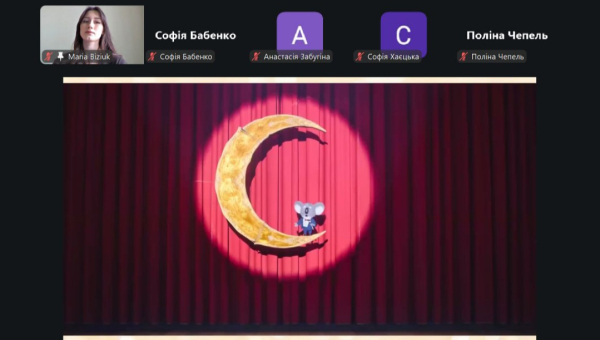
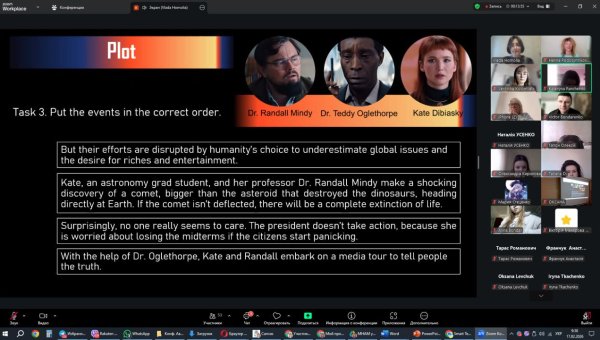
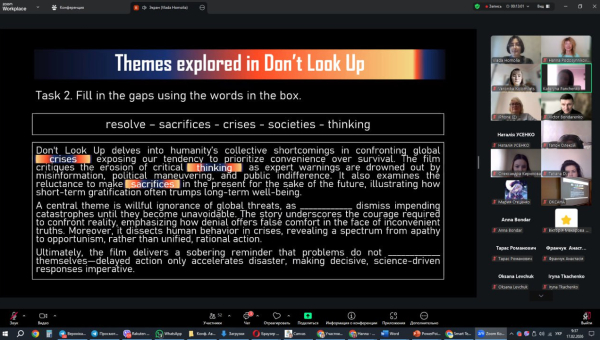
The film is shown in short fragments of around 5 minutes each. After every fragment, participants complete a task – answering comprehension questions, discussing a character's choice, exploring a cultural theme, or practising specific language. This cycle repeats throughout the session, keeping energy and engagement high.
After the Film
The session closes with a synthesis: participants reflect on the film as a whole, share their personal responses, and – for future teachers – analyse the session itself as a teaching model. What worked? What would they do differently in their own classroom?
Every session comes with a ready-to-use materials pack: a lesson plan, a multimedia presentation, a student guide, a teacher guide with answer keys, and the video materials themselves.
What Participants Gain
The Film Club is designed to develop three things at once:
English Language Skills
- Listening to natural, unscripted English
- Speaking fluently and confidently in discussions
- Expanding vocabulary through real cultural contexts
- Understanding how language works in real-life situations
Intercultural Awareness
- Understanding different cultural values and ways of life
- Moving beyond stereotypes through genuine cross-cultural dialogue
- Developing empathy, tolerance, and open-mindedness
- Seeing your own culture more clearly through another's eyes
Professional Teaching Skills
- Planning and running film-based lessons
- Designing tasks that challenge and motivate students
- Reflecting critically on teaching and learning processes
- Building confidence and professional identity as a teacher
A Safe Space to Speak and Think
One of the things participants notice most about the Film Club is the atmosphere. There is no pressure to be perfect. Language mistakes are a normal part of the process, not something to be ashamed of. What matters is genuine communication — sharing your opinion, listening to others, asking questions, changing your mind.
The film provides a shared starting point, so no one has to worry about running out of things to say. Everyone brings their own experience and perspective – and that diversity is exactly what makes the discussions rich and meaningful.
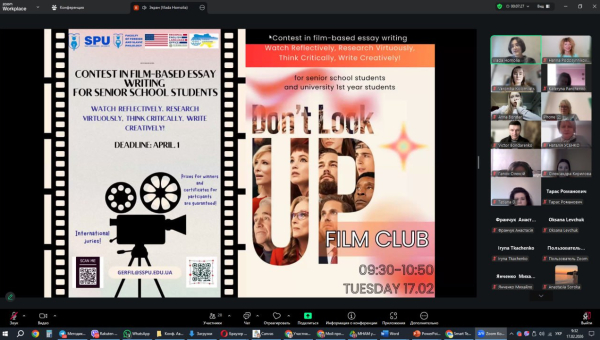
International Contest in Film-Based Essay Writing: “Watch Reflectively, Research Virtuously, Think Critically, Write Creatively!”
In 2023, the International Contest in Film-Based Essay Writing: “Watch Reflectively, Research Virtuously, Think Critically, Write Creatively!” was launched. This contest showcases critical thinking, research skills and creativity, commitment to truth and rational inquiry, to inspire others with words, and to leave own unique signature on the crucial conversation about how we respond to global threats!
https://fisf.sspu.edu.ua/vseukrainskyi-konkurs-tvorchoho-pysma-za-filmom-anglfil
Want to Get Involved?
The Film Club is open to students, teachers, and anyone with a passion for languages, cultures, and storytelling. Whether you want to join a session, collaborate on research, or bring the methodology to your own institution, we would love to hear from you.
Get in touch with the Interuniversity Research Laboratory of Modern Technologies for Teaching Foreign Languages and Cultures at A. S. Makarenko Sumy State Pedagogical University.









_thumbnail.jpg)
_thumbnail.jpg)
_thumbnail.jpg)
_thumbnail.jpg)
_thumbnail.jpg)
_thumbnail.jpg)
_thumbnail.jpg)